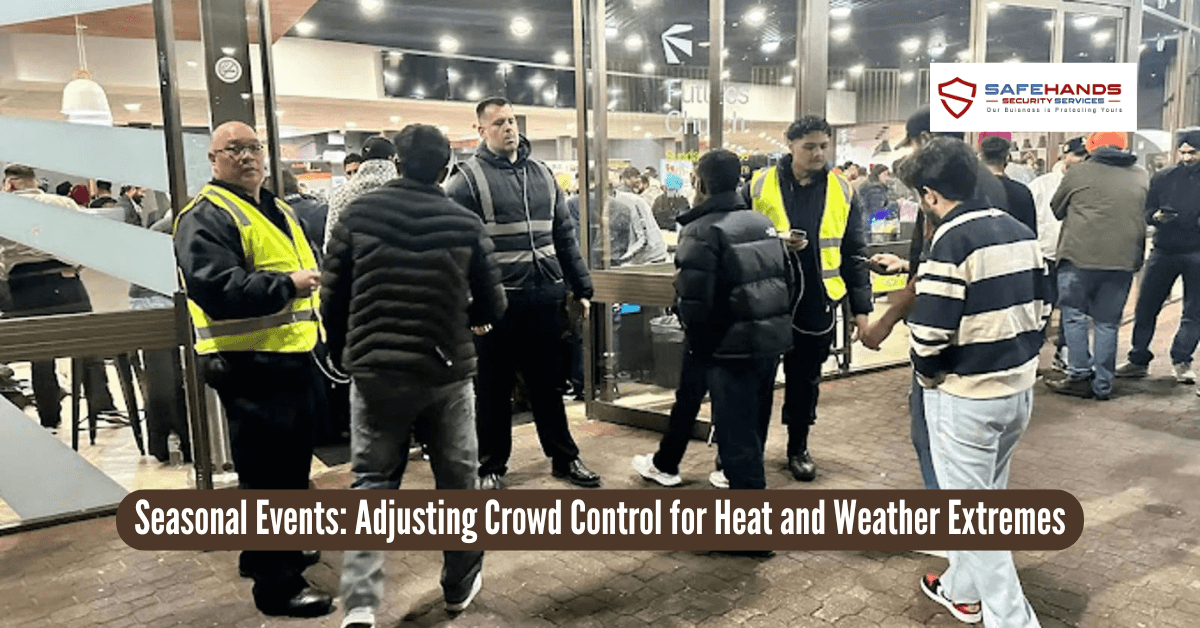
Seasonal Events: Adjusting Crowd Control for Heat and Weather Extremes
Adelaide is renowned for its vibrant calendar of outdoor events, featuring a diverse range of activities including summer festivals and concerts, sporting fixtures, religious gatherings, weekend markets and community celebrations. However, South Australia is also known for its extreme heat. And these heatwaves are becoming more frequent and intense, and for event organisers, this creates a serious crowd safety challenge that cannot be treated as an afterthought.
Effective crowd control during hot weather requires more than additional water bottles or shade tents. It demands thoughtful planning, adaptable on-ground strategies, clear communication and close coordination between security, medical teams and emergency services. For event organisers and decision-makers, adjusting crowd management for heat extremes is now a critical part of responsible event planning in Adelaide.
The Crowd Safety Risks of Extreme Heat
High temperatures significantly increase risk within dense or mobile crowds. When heat is combined with long-standing times, alcohol consumption, physical exertion or limited airflow, crowd safety issues can escalate rapidly.
Key heat-related crowd risks include:
- Heat stress and heat exhaustion, particularly among children, older adults and people with underlying conditions
- Dehydration, leading to dizziness, confusion and fainting
- Fatigue, reduced patience and compliance with instructions
- Agitation and aggression, which can increase crowd tension and conflict
- Medical emergencies, including heat stroke, which can be life-threatening
According to SafeWork SA and SA Health guidance, extreme heat is a recognised workplace and public safety hazard, especially at outdoor events where people are exposed for long periods. Research from the Australian Institute of Health and Welfare shows heatwaves cause more deaths in Australia than any other natural hazard, highlighting why proactive planning is essential.
Pre-Event Planning for Heatwave Conditions
Strong crowd control during the heat begins well before the event day.
Monitor weather forecasts closely
Event organisers should monitor Bureau of Meteorology forecasts daily in the lead-up to an event. Heat thresholds should be built into event management plans, with trigger points for additional controls or schedule changes.
Conduct a heat-specific risk assessment
In line with South Australian event safety and WHS guidelines, assess:
- Expected crowd size and density
- Duration of attendance
- Availability of shade, water and cooling
- Site layout and airflow
- Demographics of attendees
Outdoor concerts in parklands, religious gatherings, sporting fixtures and street festivals all present different heat risks that must be planned for individually.
Design the site for heat management
Planning considerations should include:
- Shaded rest areas
- Cooling stations or misting fans
- Water refill points clearly marked on maps
- Reduced walking distances where possible
Experienced planners often consult a security company in Adelaide during this stage to ensure crowd flow, supervision points and emergency access routes are realistic under heat stress conditions.
On-Ground Crowd Control Adjustments During High Temperatures
Once gates open, static crowd plans must become flexible.
Dynamic crowd monitoring
Security and crowd controllers should actively monitor:
- Signs of heat distress
- Slowing movement or bottlenecks
- Crowds gathering in shaded or limited-airflow areas
High temperatures can cause people to cluster around shade or amenities, increasing density risks if not managed proactively.
Adjust activity pacing
Where possible, organisers should:
- Stagger performance times or activities
- Schedule high-energy activities earlier or later in the day
- Allow longer breaks between sessions
These adjustments reduce physical strain on attendees and staff alike.
Security Staff Welfare, Positioning and Rotations
Security personnel are on the front line during heat events, and their well-being directly impacts crowd safety.
Strategic staff positioning
Crowd controllers should be positioned:
- Near high-risk areas (queues, barriers, stages)
- At water points and cooling zones
- Along entry and exit routes
Working with professional security guard services in Adelaide ensures staff are trained to recognise early signs of heat stress and respond calmly and effectively.
Rest rotations and hydration
Best practice includes:
- Shorter shift rotations
- Scheduled hydration breaks
- Access to shaded rest areas
- Lightweight, heat-appropriate uniforms
Fatigued staff are less observant and slower to respond, increasing overall risk.
Managing Entry, Exit and Queuing Under Heat Stress
Queues are one of the most dangerous areas during extreme heat.
Reduce wait times
Organisers should:
- Open the gates earlier
- Increase entry points
- Use pre-event ticket scanning where possible
Shade and airflow
Temporary shade structures, fans or water misting along queues can significantly reduce risk. Clear signage reminding attendees to hydrate while waiting also improves compliance.
Controlled exits
At the end of events, heat-affected crowds may move more slowly. Exit routes should be well-lit, clearly signed and actively monitored by crowd controllers in Adelaide to prevent congestion or panic.
Clear Communication Before and During the Event
Communication is one of the most powerful heat-risk controls available.
Pre-event messaging
Before the event, organisers should:
- Share heat warnings via social media and email
- Encourage attendees to bring hats, sunscreen and refillable bottles
- Promote transport options to reduce walking distances
On-site communication
During the event:
- Use PA systems and digital screens for heat safety reminders
- Clearly announce locations of water, shade and medical tents
- Encourage people to seek help early if they feel unwell
Calm, consistent messaging reduces anxiety and improves crowd cooperation.
Coordination with Medical Teams and Emergency Services
Heat incidents can escalate quickly without proper coordination.
Medical preparedness
Medical teams should be:
- Briefed on forecast conditions
- Positioned near high-density areas
- Equipped for heat-related treatment
Emergency access
Event layouts must maintain clear access routes for ambulances and emergency responders, as recommended by South Australian event safety guidelines.
Regular communication between security supervisors, medical staff and event managers ensures a fast response if conditions deteriorate.
Simple Heatwave Crowd Control Checklist
Before the event
- Check BOM heat warnings
- Update the heat-specific risk assessment
- Confirm water, shade and cooling provisions
- Brief security and medical teams
During the event
- Monitor crowd density and behaviour
- Rotate staff regularly
- Communicate heat safety messages
- Respond early to signs of heat stress
After the event
- Manage controlled exits
- Debrief staff on heat-related incidents
- Record lessons learned for future events
Final Thoughts
Heatwaves are no longer rare in Adelaide; they are a predictable risk that must be built into every major event plan. By adapting crowd control strategies for extreme temperatures, event organisers not only meet their duty of care but also create safer, more enjoyable experiences for attendees.
If you’re planning a public event and want guidance on heat-specific crowd management, professional planning support from SafeHands Security Services, can help identify risks early and implement practical, effective controls that protect both people and reputation.